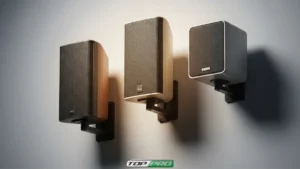
Consumer audio is built for enjoyment, convenience, and home use. It often shapes the sound to feel fuller, warmer, or more exciting. Professional audio is built for accuracy, durability, and consistent performance at high output levels. It uses balanced connections and higher signal levels so sound stays clean and reliable in studios and live venues.
The real differences come down to application, signal level, connection type, power handling, and overall design philosophy.
1. Purpose and design philosophy
Consumer audio
Consumer audio is designed to make music sound good with minimal effort. It prioritizes comfort, style, and ease of use over technical precision.
Core goals
- Pleasant and engaging sound
- Simple setup and operation
- Compact size and attractive design
Typical environments
- Living rooms and bedrooms
- Desks and personal workspaces
- Small home entertainment setups
Professional audio
Professional audio is designed for work. Whether that work is recording, mixing, broadcasting, or running live sound, the system must perform predictably every time.
Core goals
- Accurate and neutral sound reproduction
- Reliability during long sessions
- Consistent performance under stress
Typical environments
- Recording studios
- Live venues and stages
- Broadcast and installation spaces
2. Sound tuning: enjoyment vs accuracy
One of the most noticeable differences between consumer and professional audio is how the sound is tuned.
Consumer sound tuning
- Often boosts bass and high frequencies
- Designed to sound exciting at lower volumes
- Masks minor flaws in recordings
This tuning makes everyday listening more enjoyable, especially in untreated rooms.
Professional sound tuning
- Aims for flat and honest frequency response
- Reveals problems like distortion or imbalance
- Helps engineers make accurate decisions
Neutral sound may feel less impressive at first, but it provides reliable reference.
3. Signal levels and why they matter
Signal level is a technical difference that affects noise, clarity, and system stability.
Consumer signal levels
- Typically operate around -10 dBV
- Intended for short cable runs
- More sensitive to electrical interference
Professional signal levels
- Typically operate around +4 dBu
- Provide stronger signal with more headroom
- Maintain clarity over long cable runs
Higher signal levels help professional systems stay clean in electrically noisy environments.
4. Connection types and noise control
The type of connection used directly impacts noise rejection.
Common consumer connections
- RCA
- 3.5 mm
- TS
These are unbalanced connections. They work well for short distances but can pick up noise over longer runs.
Common professional connections
- XLR
- TRS
These are balanced connections. Balanced lines cancel out interference, keeping signals clean even in complex setups.
5. Build quality and durability
Consumer and professional gear are built for very different lifestyles.
Consumer build quality
- Lightweight materials
- Designed to remain stationary
- Limited cooling and protection
This is usually sufficient for home use but not for heavy workloads.
Professional build quality
- Metal enclosures and reinforced connectors
- Better heat management
- Designed for transport and continuous use
Professional equipment is built to survive long hours, heat, vibration, and frequent handling.
6. Power ratings and real-world performance
Power specifications are often misunderstood.
Consumer power ratings
- Often emphasize peak or maximum wattage
- Designed for modest room sizes
- Can distort when pushed hard
Professional power ratings
- Focus on continuous output
- Designed for high volume without distortion
- Offer more usable headroom
Headroom allows professional systems to stay clean and controlled at loud levels.
7. Features and system flexibility
The feature sets of consumer and professional gear reflect their intended users.
Consumer audio features
- Wireless connectivity
- Preset sound modes
- Simple, one-button operation
These features favor convenience over control.
Professional audio features
- Phantom power for microphones
- Balanced inputs and outputs
- Flexible routing and expansion options
Professional systems assume technical knowledge and reward careful setup.
8. Real-world use cases
When consumer audio makes sense
- Casual music and movie listening
- Home entertainment systems
- Users who want simplicity and style
When professional audio makes sense
- Music production and recording
- Live events and venues
- Broadcast and installation work
Choosing the right category depends on how demanding the application is.
9. Common misconceptions
Professional audio always sounds better
Neutral sound can feel harsh or dull in small rooms without treatment.
Consumer audio is low quality
Consumer systems can sound excellent within their intended use.
You need professional gear to make good music
Skill and technique matter more than equipment.
10. How to choose the right option
Ask yourself a few practical questions:
- Is this for enjoyment or for work?
- Will the system stay in one place or travel?
- Do I need accuracy or excitement?
- Am I comfortable learning basic audio setup?
Your answers usually make the decision clear.
Final takeaway
Consumer audio and professional audio are built for different goals. Consumer gear focuses on convenience and enjoyable sound in small spaces. Professional gear focuses on precision, durability, and reliable performance under pressure.
Neither is better by default. The best choice is the one that matches how you actually plan to use the equipment.